

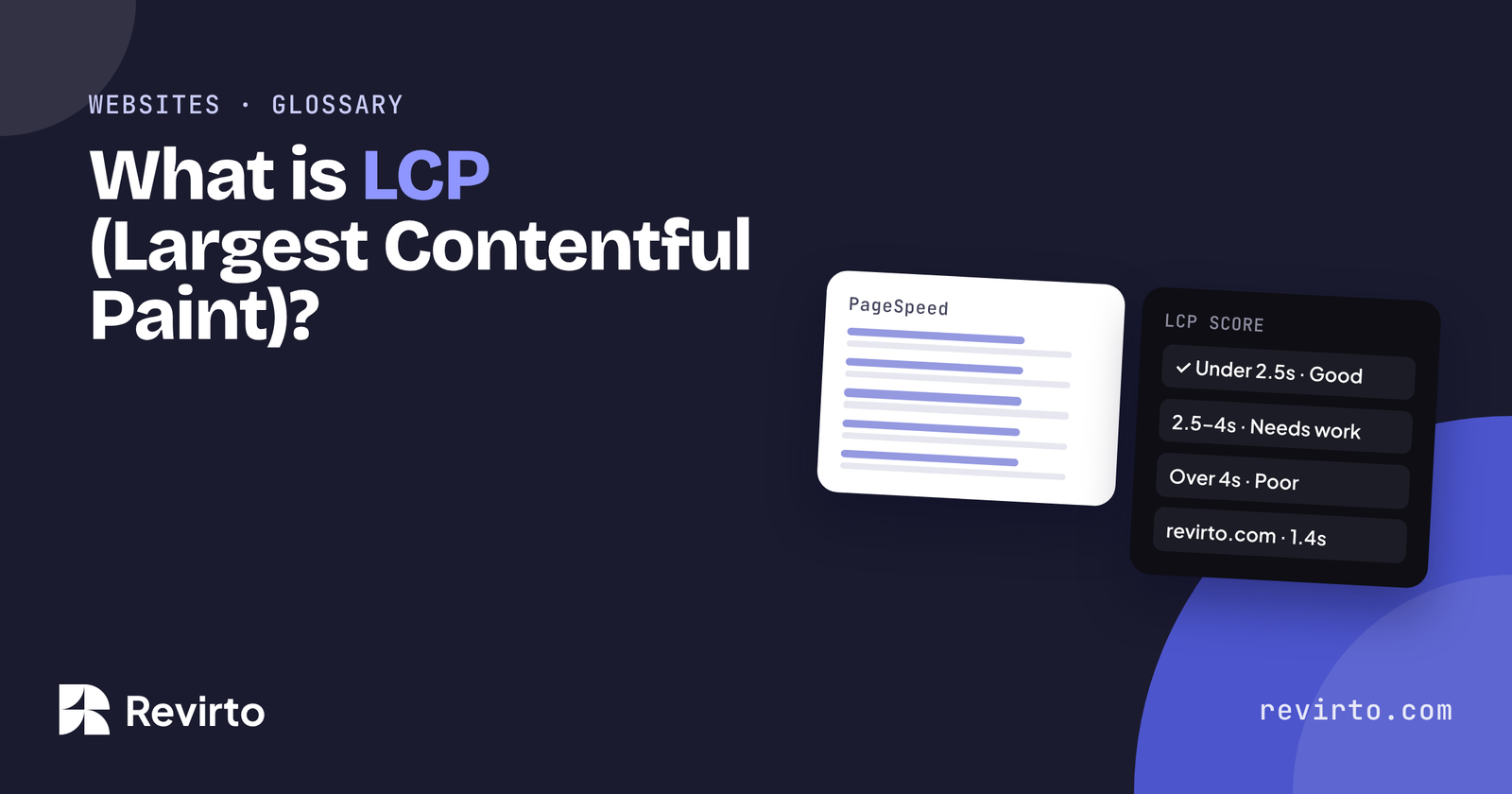
Largest Contentful Paint (LCP) measures how long it takes for the biggest visible thing on a page, usually the hero image or main heading, to appear on screen. Google counts 2.5 seconds or less as good, and over 4 seconds as poor. It’s one of Google’s three Core Web Vitals, and it’s the one people feel most: a slow LCP is the blank screen that makes visitors leave.
Key takeaways
- What it measures How long the biggest visible thing on the page, usually the hero image or main heading, takes to appear on screen.
- Google’s bands 2.5 seconds or less is good. 2.5 to 4 seconds needs improvement. Over 4 seconds is poor.
- How it is judged On the 75th percentile of real visits, so three visits in four have to hit the target, not just your office Wi-Fi.
- Our number revirto.com loads its main content in 1.4 seconds on mobile and 0.5 seconds on desktop, built with Elementor on shared hosting.
- Usual cause A huge hero image or a slow server response, not the content. Most of it is fixable without a rebuild.
- WordPress sites that feel slow on a phone
- Owners failing Core Web Vitals in Search Console
- Sites built on a page builder
- Anyone hoping a speed plugin alone fixes a heavy theme
- Sites with no traffic yet (fix the content first)
What is LCP?
When a page loads, things appear in stages: a background colour, the menu, some text, then the big image or headline. LCP marks the moment the largest of those, in the visible part of the screen, has finished loading.
It’s a good stand-in for “when does this page feel loaded?” That’s why Google made it one of its three Core Web Vitals, alongside INP (how quickly the page responds when you tap) and CLS (how much things jump around while loading). Like schema markup, it’s one of those technical terms worth knowing, because it affects how both people and search engines see your site.
What’s a good LCP?
| LCP | Google’s rating | What visitors feel |
|---|---|---|
| 2.5 seconds or less | Good | The page feels quick |
| 2.5 to 4 seconds | Needs improvement | A noticeable wait, some people leave |
| Over 4 seconds | Poor | Many visitors give up, especially on a phone |
Google judges your site on the 75th percentile of real visits: three out of four visits need to hit the target, not just your fast office Wi-Fi.
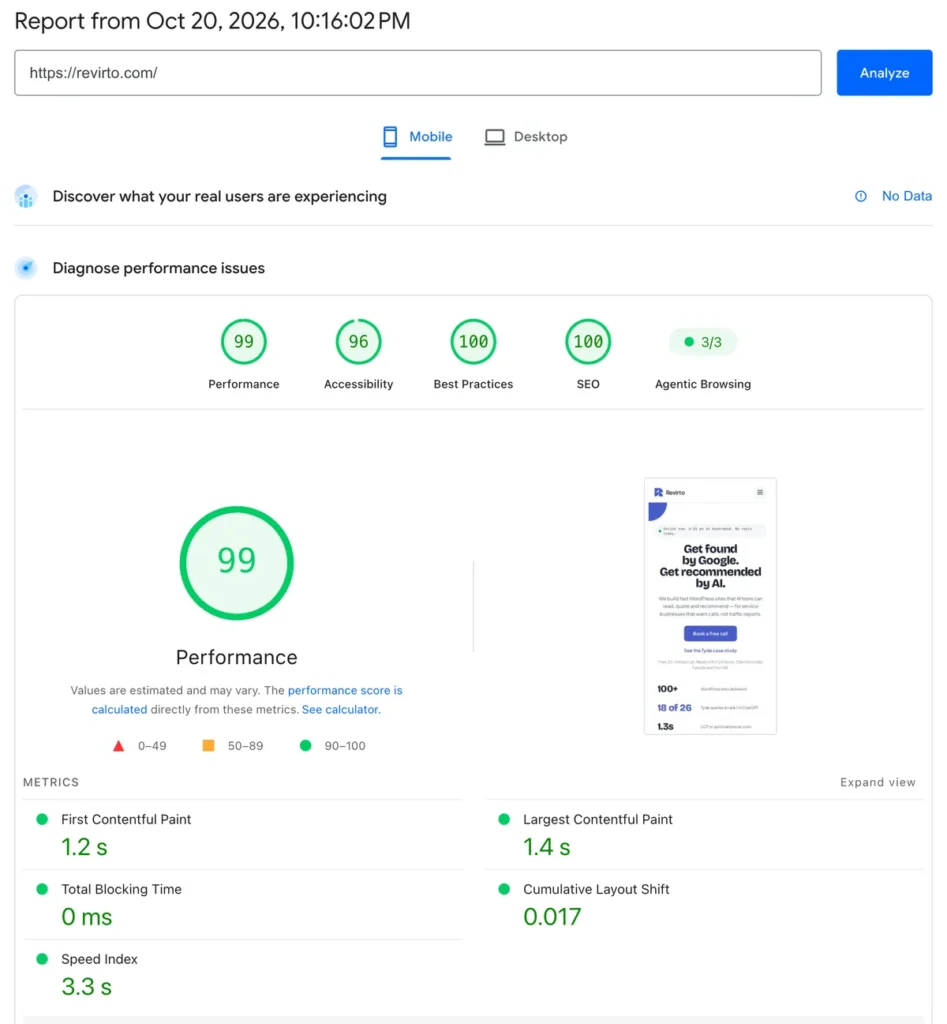
For reference, our own site, revirto.com, has an LCP of 1.4 seconds on mobile and 0.5 seconds on desktop, built with Elementor on shared hosting. It’s the same approach we use for our websites.
What makes it slow?
On most WordPress sites, slow LCP comes from a short list of causes:
| Cause | What’s happening | The fix |
|---|---|---|
| A huge hero image | A 3 MB photo where a 150 KB one would do | Resize, compress and serve WebP |
| Slow server response | Cheap or overloaded hosting takes a second before anything starts | Better hosting and page caching |
| Heavy theme and plugins | Scripts and styles for features the page doesn’t use | A lighter theme, fewer plugins |
| Fonts loading late | Text waits for a font file before showing | Preload the main font, limit font weights |
| Sliders and animations | The main content only appears after a script runs | Use a still hero instead |
| Lazy-loading the hero | The main image is told to wait | Don’t lazy-load anything in the first screen |
Most of these can be fixed without a rebuild. That’s the job of WordPress speed optimisation.
How do you check it?
- PageSpeed Insights (pagespeed.web.dev): paste your page, choose Mobile, and look at LCP. The top section shows real-visitor data if your site gets enough traffic; the lower section is a lab test.
- Google Search Console: the Core Web Vitals report shows which groups of pages pass or fail, based on real visits.
- Chrome DevTools: the Performance panel shows which element is your LCP element, so you know what to fix.
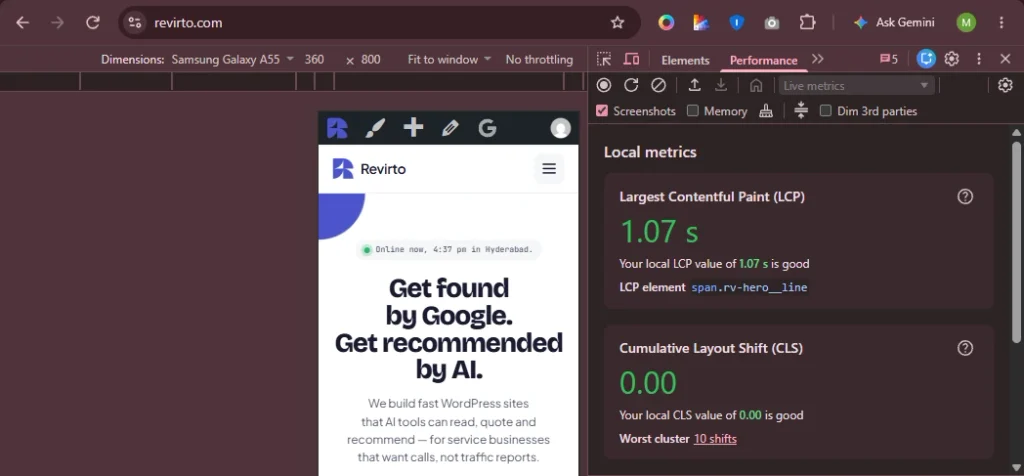
Always test the mobile result. Most service business visitors come from phones, and mobile scores are almost always worse.
What else do people ask about LCP?
Does LCP affect Google rankings?
Yes, as part of Google’s page experience signals. It won’t beat better content, but between two similar pages, the faster one has the edge.
Why is my LCP different every time I test?
Lab tests vary with network and server load. Run three tests and look at the middle one, or use the real-visitor data in Search Console.
What is the LCP element on my page?
Usually the hero image, a background image or the main heading. PageSpeed Insights names it under the diagnostics.
Can a page builder like Elementor have a good LCP?
Yes. revirto.com is built with Elementor and loads its main content in 1.4 seconds on mobile. How the page is built matters more than the builder.